How Much Should a 4 Month Old Eat? 6 Clear Answers (2026)


In this article
How Much Should a 4 Month Old Eat Per Feeding
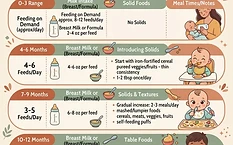
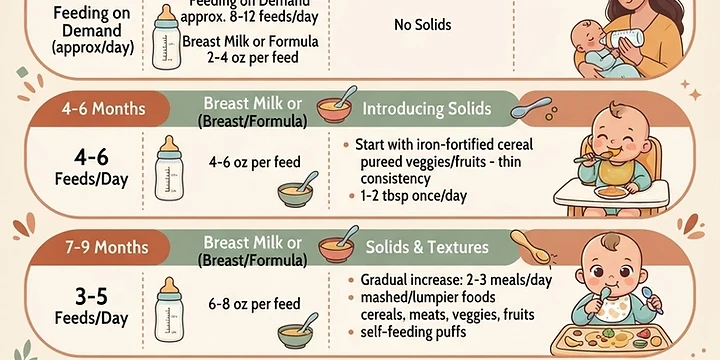
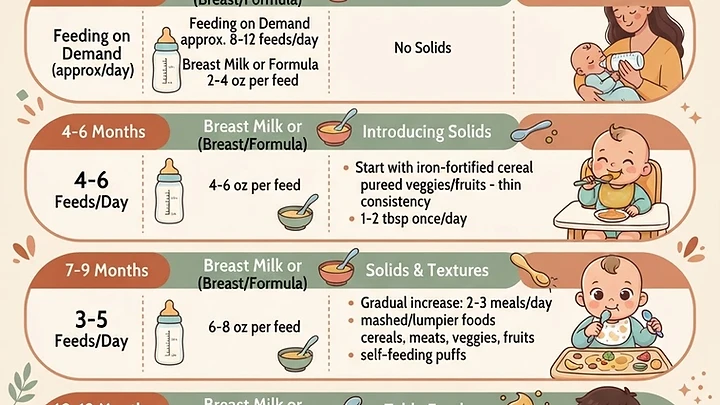
The short answer to how much should a 4 month old eat is 4 to 6 ounces per feeding, offered 5 to 6 times a day, for a daily total of 24 to 32 ounces of breastmilk or formula. At this age, how much should a 4 month old eat depends heavily on your baby's individual size, growth rate, and activity level — a larger or more active baby may need closer to the top of that range, while a smaller or calmer baby may be perfectly content at the lower end. The question of how much should a 4 month old eat also comes up more urgently during growth spurts, which commonly hit around 4 months and can temporarily push intake higher for 2 to 3 days before settling back down. It's worth noting that how much should a 4 month old eat is still entirely a milk question — the American Academy of Pediatrics recommends waiting until 6 months before introducing solids, so none of this daily total should come from purees or cereal yet. If you want the full day-by-day rhythm, not just the ounce totals, our 4 month old feeding schedule guide lays out a complete sample routine.

How Much Should a 4 Month Old Eat: Breastfed vs Formula-Fed
The answer to how much should a 4 month old eat shifts slightly depending on feeding method. Breastfed babies are harder to measure in exact ounces, but research suggests they take in roughly the same 24 to 32 ounce daily total, spread across 6 to 8 shorter, more frequent feeds because breastmilk digests quickly. Formula-fed babies tend to take larger volumes less often — typically 5 to 6 feeds of 5 to 7 ounces each. For combination-fed babies, how much should a 4 month old eat is best tracked as a running daily total across both breast and bottle rather than judged feed by feed. Whichever method you use, how much should a 4 month old eat should never be forced past the point of fullness — pushing a baby to finish a bottle when they've turned away or started fussing can override their natural fullness cues, a pattern linked to overfeeding later in infancy. Trust the cues over the calculator.
Ready to put this into practice?
Get our expert-crafted feeding guides and meal plans.

Signs Your 4 Month Old Is Eating Enough (or Too Little)
Rather than obsessing over exact ounces, use these signs to answer how much should a 4 month old eat for your specific baby. Diaper output: 6 or more wet diapers and at least 1 to 2 dirty diapers per day suggest adequate intake. Weight gain: your baby should continue gaining roughly 5 to 7 ounces per week at this age, tracked at pediatrician visits. Contentment: a well-fed 4 month old is relaxed and satisfied for 3 to 4 hours after a feed, not rooting or fussing again within the hour. Alertness: a baby getting enough milk is bright-eyed and engaged during awake windows rather than lethargic. If you're consistently unsure whether how much should a 4 month old eat is being met — especially if diaper counts drop, weight gain slows, or your baby seems constantly hungry even after a full feed — call your pediatrician rather than guessing. For related reading on solid food readiness at this age, see our guide on food for infants 4 months.
Frequently Asked Questions
How many ounces should a 4 month old eat in total per day?
Most 4 month olds need 24 to 32 ounces of breastmilk or formula per day, split across 5 to 6 feedings of 4 to 6 ounces each.
Is it normal for a 4 month old to suddenly eat more?
Yes — growth spurts are common around 4 months and can temporarily increase hunger for 2 to 3 days. Feed on demand during this window rather than sticking to a fixed volume.
Should a 4 month old be eating solid food yet?
The AAP recommends waiting until 6 months for most babies. At 4 months, 100% of intake should still come from breastmilk or formula unless your pediatrician advises otherwise for medical reasons.
Conclusion
How much should a 4 month old eat comes down to 24 to 32 ounces a day for most babies, split across 5 to 6 feedings — but hunger cues, diaper output, and weight gain matter more than hitting an exact number. For the full daily routine, explore our 4 month old feeding schedule, or see our Baby Feeding Schedule by Month guide for what comes next.
Ready to put this into practice?
Get our expert-crafted feeding guides and meal plans.


Dr. Emily Carter, MD
MD, Pediatrician
Pediatrician focused on infant growth and feeding schedules, helping parents translate AAP and WHO guidance into practical day-to-day routines.
Explore our feeding guides