4 Month Old Baby Food: 6 Safe Starter Ideas (2026)

In this article
Is 4 Month Old Baby Food Safe?
The question of 4 month old baby food is nuanced. While previous generations started solids at 4 months (and some pediatricians still give the green light), the current consensus from the World Health Organization and the American Academy of Pediatrics is to wait until 6 months for most babies. However, 4 month old baby food can be appropriate in specific situations — for example, if your baby shows clear readiness signs and your pediatrician recommends early introduction for allergy prevention (particularly for peanuts). If you and your pediatrician decide that 4 month old baby food is right for your baby, the approach must be extremely gentle. 4 month old baby food should be ultra-thin purees, single-ingredient, and offered in tiny amounts — one or two teaspoons once a day. The digestive system at 4 months is still maturing, so 4 month old baby food must be easy to digest: iron-fortified cereal thinned with breast milk or formula, or very smooth fruit and vegetable purees. 4 month old baby food should never include anything chunky, and the tongue-thrust reflex must have disappeared. If your baby pushes food out, they are not ready — wait and try again in a few weeks.


6 Safe 4 Month Old Baby Food Ideas
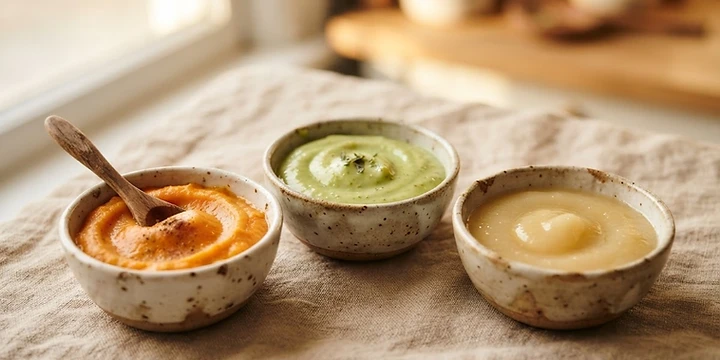
If your pediatrician approves 4 month old baby food, here are six safe options. 1. iron-fortified rice or oatmeal cereal — the most traditional 4 month old baby food, thinned to a liquid consistency with breast milk or formula. 2. sweet potato puree — steamed and blended until ultra-smooth. 3. avocado puree — mashed and thinned with milk to a very runny consistency. 4. pear puree — steamed and blended smooth. 5. apple puree — cooked until very soft, blended with cooking water. 6. banana puree — mashed very ripe banana, thinned with milk. These 4 month old baby food options are all single-ingredient, low-allergen, and easy to digest. Start with just one 4 month old baby food at a time, offering one teaspoon, and wait 3 to 5 days before introducing another. If any 4 month old baby food causes a reaction (rash, vomiting, diarrhea), stop immediately and contact your pediatrician. The purpose of 4 month old baby food at this stage is exploration, not nutrition — milk remains 100% of your baby's nutrition until 6 months.
Ready to put this into practice?
Get our expert-crafted feeding guides and meal plans.

What 4 Month Old Baby Food Should Avoid
If you are offering 4 month old baby food, knowing what to avoid is just as important as what to serve. Never give honey to a baby under 12 months — it carries a botulism risk that can be fatal. 4 month old baby food should never contain added salt (babies' kidneys cannot process it), added sugar (unnecessary and develops a sweet tooth), cow's milk as a drink (can cause intestinal bleeding and allergies; small amounts in cooked foods are fine), eggs (unless specifically advised by an allergist for early introduction), fish or shellfish, nuts or nut butters (unless thinned to a safe consistency and approved for early allergen introduction), and any choking hazards like whole grapes, nuts, or hard chunks. 4 month old baby food should also avoid processed foods, juices (even baby juices have no nutritional benefit and can cause diarrhea), and raw or undercooked foods. The golden rule for 4 month old baby food: if it comes in a package with a long ingredient list, it is probably not appropriate. Stick to whole, single-ingredient foods prepared at home. If you are ever unsure whether a food is safe for your 4 month old baby food journey, err on the side of caution and ask your pediatrician first. The early weeks of 4 month old baby food set the stage for your baby's relationship with food.
Food for Infants 4 Months: What Most Pediatricians Actually Recommend
The phrase food for infants 4 months gets searched constantly by parents wondering if they're behind schedule — the honest answer is that for most babies, food for infants 4 months simply isn't necessary yet. The World Health Organization and American Academy of Pediatrics both point to 6 months as the target, based on research showing a baby's gut and kidneys are better equipped to handle solids by that point, and that early solids don't reliably improve sleep or growth for the average infant. That said, food for infants 4 months can occasionally be appropriate — a small subset of babies show every readiness sign early (sitting with support, no tongue-thrust reflex, genuine interest in food), and some allergists now recommend introducing peanut and egg as early as 4 to 6 months specifically to reduce allergy risk in higher-risk infants. If you're weighing food for infants 4 months against waiting, the deciding factor should always be your own pediatrician's assessment of your baby's individual development, not a general guideline or what other parents are doing. For the milk-only routine most 4-month-olds are still following, see our 4 month old feeding schedule, and if you're tracking exact ounces, how much should a 4 month old eat has the full breakdown.
Frequently Asked Questions
Can I start solids at 4 months?
The current recommendation is to wait until 6 months, but some pediatricians may approve early introduction for allergy prevention. Always consult your pediatrician first.
What foods are safe for a 4 month old?
If approved, only ultra-thin single-ingredient purees: iron-fortified cereal, sweet potato, avocado, pear, apple, or banana. No chunks, salt, sugar, or honey.
What foods should a 4 month old avoid?
Never give honey (botulism risk), added salt, added sugar, cow's milk as a drink, eggs, fish, nuts, or any choking hazards like whole grapes or hard chunks.
Is food for infants 4 months recommended by pediatricians?
Most pediatricians recommend waiting until 6 months. Food for infants 4 months is only advised in specific cases, such as allergy-prevention protocols for high-risk babies, and always with direct pediatrician guidance.
Conclusion
4 month old baby food should only be considered with your pediatrician's approval and clear readiness signs. If you do start, keep it ultra-thin, single-ingredient, and exploratory. For the milk-focused routine most babies this age still follow, see our 4 month old feeding schedule and how much should a 4 month old eat guides. When your baby is ready for real solids at 6 months, our 6 month old feeding schedule covers first foods, portions, and a full daily routine.
Ready to put this into practice?
Get our expert-crafted feeding guides and meal plans.


Dr. Sarah Chen, MD
MD, Pediatrician
Board-certified pediatrician with 12 years of experience in infant feeding, allergen introduction, and early nutrition. Reviews all allergy and safety content on NewbornMeals for medical accuracy.
Explore our feeding guides