6 Month Old Feeding Chart: Milk Ounces + Solids by Day (2026)

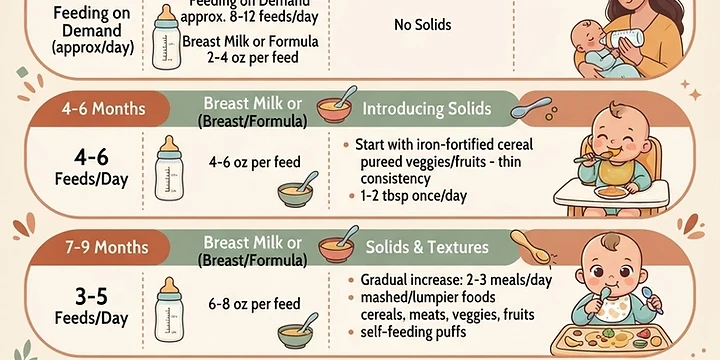
Free printable: the 6-month baby feeding chart
Grab the same chart we reference in this guide as a printable PDF — pin it to the fridge, no more guessing at portions.

In this article
What a 6 Month Old Feeding Chart Looks Like
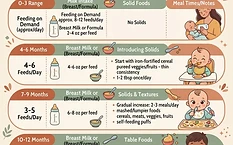
A 6 month old feeding chart is the first chart that shows milk and solid food side by side, because 6 months is when the American Academy of Pediatrics (AAP) and the World Health Organization (WHO) recommend introducing solids. The chart has three columns: time of day, milk amount, and solid food portion. Milk remains the primary nutrition source — the 6 month old feeding chart calls for 24 to 32 ounces of breastmilk or formula per day, spread across 4 to 5 feedings of 6 to 8 ounces each. Solids start small: 1 to 2 tablespoons at one meal per day, building to two meals by the end of the month. The CDC emphasizes that solids at 6 months are about exploration and allergen exposure, not replacement of milk — so every 6 month old feeding chart lists milk first and solids second. The chart also tracks which foods have been introduced and watched for reactions, since the AAP recommends introducing one new food every 2 to 3 days. For the full daily routine behind the chart, see our 6 month old feeding schedule guide, and if you want the routine broken down by breastfed, formula-fed, or combination-fed, see our feeding schedule for a 6 month old by feeding type.

Full Day Sample 6 Month Old Feeding Chart
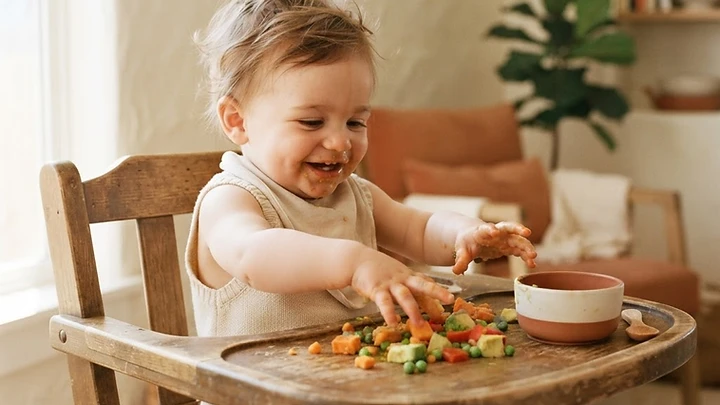
Here is a full-day 6 month old feeding chart from wake to bedtime. 7:00 AM — wake up, milk feed (6 to 8 ounces). 10:30 AM — milk feed (6 to 8 ounces). 12:30 PM — solid meal: 1 to 2 tablespoons of iron-fortified oat cereal mixed with breastmilk or formula, plus 1 to 2 tablespoons of a single-ingredient puree (sweet potato, carrot, or avocado). 2:30 PM — milk feed (6 to 8 ounces). 5:00 PM — optional second solid meal (once your baby has eaten solids for 2 to 3 weeks): 1 to 2 tablespoons of mashed banana, pear, or pureed lentils. 6:30 PM — milk feed (6 to 8 ounces). 10:00 PM — optional dream feed (4 to 6 ounces). This 6 month old feeding chart provides 24 to 32 ounces of milk plus one to two small solid meals. Always offer milk before solids on the chart so your baby is not too full to nurse or bottle-feed. The chart is a guideline — follow your baby's hunger and fullness cues and adjust timing as needed. Some 6 month olds still feed once overnight, which is normal and included on the chart when it happens.
Ready to put this into practice?
Get our expert-crafted feeding guides and meal plans.


First Foods Chart for 6 Month Olds
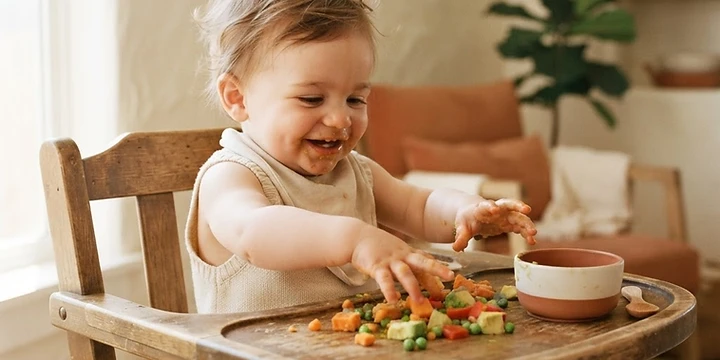
The first foods section of a 6 month old feeding chart prioritizes iron-rich options, because the AAP and CDC both note that iron stores from birth deplete by 6 months and dietary iron becomes essential. Here is a first foods chart with foods, amounts, and textures. Iron-fortified infant cereal (rice or oat) — 1 to 2 tablespoons, thin puree consistency mixed with breastmilk or formula. Sweet potato — 1 to 2 tablespoons, smooth puree. Carrot — 1 to 2 tablespoons, smooth puree. Avocado — 1 to 2 tablespoons, mashed smooth. Banana — 1 to 2 tablespoons, mashed. Pear — 1 to 2 tablespoons, smooth puree (cooked first). Lentils — 1 to 2 tablespoons, smooth puree. Egg yolk — 1 yolk, mashed (the AAP supports early egg introduction). Pureed chicken or beef — 1 to 2 tablespoons, smooth puree. Texture on the chart starts very thin, like soup, and thickens gradually as your baby learns to manage it. Introduce one new food every 2 to 3 days and watch for allergic reactions. For a full collection of preparation methods, see our baby puree recipes guide. Foods to avoid on every 6 month old feeding chart: honey (botulism risk until 12 months per the AAP, WHO, and CDC), added salt (babies' kidneys cannot process the sodium load), added sugar (unnecessary and trains a sweet preference), and cow's milk as a drink (wait until 12 months — small amounts in cooking or yogurt are fine).
How the Chart Changes Week by Week Across Month 6
A 6 month old feeding chart is not static — it evolves week by week as your baby builds solids skills. Week 1: one solid meal per day, 1 to 2 teaspoons, very thin puree consistency. Milk stays at 24 to 32 ounces. The goal is exposure, not intake — expect most of it to end up on the bib. Week 2: one solid meal, 1 to 2 tablespoons, slightly thicker texture. Your baby is learning to move food to the back of the mouth and swallow. Week 3: one solid meal, 2 tablespoons, thicker texture with tiny soft lumps if your baby is managing well. The CDC notes that texture progression matters as much as ingredients — staying on smooth purees too long can delay chewing development. Week 4: two solid meals per day, 2 tablespoons each, thicker textures. Milk remains 24 to 32 ounces. By the end of week 4, your baby should be eating two small meals comfortably and have tried 4 to 6 different foods. Throughout all weeks, the 6 month old feeding chart keeps milk as the primary nutrition source — if solids displace milk and daily intake drops below 24 ounces, reduce solid portions and offer milk first.
When to Move to the 7 Month Old Feeding Chart
Knowing when to transition from the 6 month old feeding chart to the 7 month old feeding chart is straightforward. Move to the 7 month chart when your baby is comfortably eating two solid meals per day, taking 24 to 30 ounces of milk, and showing readiness for more variety and texture. Signs it is time: your baby opens their mouth for the spoon, swallows without difficulty, handles thicker textures with small lumps, and shows interest in a wider range of foods. The 7 month old feeding chart expands to two solid meals with 2 to 3 tablespoons each, introduces a wider variety of proteins and vegetables, and progresses textures from smooth purees to mashed with lumps. The CDC and AAP both emphasize that texture progression should continue — do not stay on thin purees longer than necessary. If your baby is struggling with the 6 month old feeding chart — gagging frequently, refusing the spoon, or not swallowing — stay at the 6 month chart and consult your pediatrician before advancing. Every baby progresses at their own pace. For the complete month-by-month progression, explore our 6 month old feeding schedule category for related guides and resources.
Frequently Asked Questions
When should I start using a 6 month old feeding chart?
The AAP and WHO recommend introducing solids at around 6 months of age. Start the 6 month old feeding chart when your baby can sit with support, hold their head steady, and has lost the tongue-thrust reflex — typically right around 6 months.
How much milk should a 6 month old drink?
The 6 month old feeding chart calls for 24 to 32 ounces of breastmilk or formula per day, across 4 to 5 feedings of 6 to 8 ounces each. Milk remains the primary nutrition source — always offer milk before solids.
What are the best first foods on a 6 month old feeding chart?
The AAP and CDC recommend iron-rich first foods: iron-fortified infant cereal, pureed sweet potato, carrot, lentils, and egg yolk. Introduce one new food every 2 to 3 days and watch for allergic reactions.
Can I give my 6 month old honey?
No. The AAP, WHO, and CDC all advise no honey before 12 months because it can contain Clostridium botulinum spores that cause infant botulism, a serious and potentially fatal condition.
Can I add salt or sugar to my 6 month old's food?
No. The AAP and CDC advise against added salt because babies' kidneys are not mature enough to process the sodium load. The CDC also recommends avoiding added sugar entirely before 12 months — it is unnecessary and trains a preference for sweetness.
Can I give my 6 month old cow's milk?
Not as a drink. The AAP recommends waiting until 12 months before offering cow's milk as a beverage, as it can cause intestinal bleeding and allergies in younger babies. Small amounts in cooking, yogurt, and cheese are fine.
How many solid meals should a 6 month old eat?
The 6 month old feeding chart starts with one solid meal per day of 1 to 2 tablespoons, building to two meals by the end of the month. Milk remains the primary nutrition source throughout.
When do I move from the 6 month chart to the 7 month chart?
Move to the 7 month feeding chart when your baby comfortably eats two solid meals per day, takes 24 to 30 ounces of milk, and handles thicker textures with small lumps. If your baby struggles, stay at the 6 month chart and consult your pediatrician.
Conclusion
A 6 month old feeding chart gives you a clear, day-by-day view of milk ounces and solid food portions for the critical first month of solids. By starting with iron-rich foods, progressing textures week by week, and following AAP, WHO, and CDC guidance on what to avoid, you build a foundation for healthy eating. For the full daily routine and first-food guides, see our 6 month old feeding schedule, and for related guides and resources, explore our 6 month old feeding schedule category.
Ready to put this into practice?
Get our expert-crafted feeding guides and meal plans.


Dr. Rachel Kim, MD
MD, Pediatrician
Pediatrician specializing in early childhood nutrition, with a focus on the transition from milk-based feeding to solid foods.
Explore our feeding guides