33 Baby Puree Recipes by Age Stage (2026 Guide)
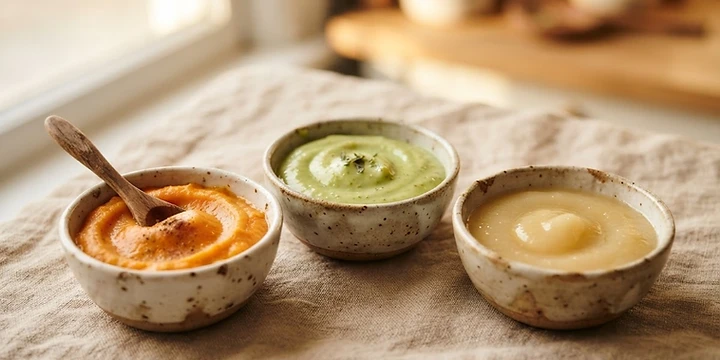
Free printable: the 6-month baby feeding chart
Grab the same chart we reference in this guide as a printable PDF — pin it to the fridge, no more guessing at portions.
In this article
- 1.Getting Started With Infant Puree Recipes
- 2.Stage 1 Baby Puree Recipes (4–6 Months, Single-Ingredient)
- 3.Stage 2 Baby Puree Recipes (6–8 Months, Combinations)
- 4.Stage 3 Baby Puree Recipes (8–10 Months, Protein & Complex)
- 5.Stage 4 Baby Puree Recipes (10–12 Months, Textured)
- 6.Storage, Freezing & Safety Rules for Baby Puree Recipes
- 7.Frequently Asked Questions
- 8.Conclusion
Getting Started With Infant Puree Recipes
Infant puree recipes are the foundation of your baby's first food journey. Unlike jarred baby food, homemade baby puree recipes let you control exactly what goes into your baby's body — no additives, no fillers, just real food. The beauty of baby puree recipes is their simplicity: most require just one or two ingredients and a blender or food processor. The American Academy of Pediatrics (AAP) and the World Health Organization (WHO) both recommend starting solids around 6 months, when your baby can sit with support, hold their head steady, and has lost the tongue-thrust reflex. Before that, breast milk or formula provides complete nutrition. When you begin baby puree recipes, the texture should be smooth and thin enough for a beginner — add breast milk, formula, or water to achieve the right consistency. As your baby grows, infant puree recipes can become thicker and chunkier, building toward solid textures. The Centers for Disease Control and Prevention (CDC) emphasizes three safety rules that apply to every baby puree recipe: no added salt (babies' kidneys cannot process it), no added sugar (unnecessary and builds a sweet tooth), and no honey before 12 months (botulism risk). Baby puree recipes also save money — a single sweet potato makes multiple servings that cost pennies compared to store-bought jars. Batch-cook on weekends, freeze in silicone ice cube trays (each cube is about one ounce), and thaw as needed. The key to great infant puree recipes is choosing ripe, fresh produce and steaming rather than boiling to retain nutrients.

Stage 1 Baby Puree Recipes (4–6 Months, Single-Ingredient)
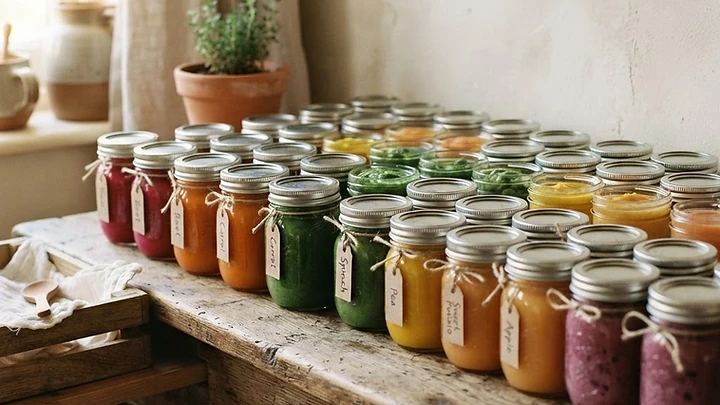
Stage 1 baby puree recipes are thin, smooth, single-ingredient purees for the newest eaters. Introduce one new ingredient every 3 to 5 days to watch for allergic reactions. Thin each puree with breast milk, formula, or steaming water to a runny consistency. 1. Sweet Potato Puree Ingredients: 1 medium sweet potato, 2–3 tbsp breast milk, formula, or water 1. Peel and dice the sweet potato into half-inch cubes. 2. Steam for 12–15 minutes until fork-tender. 3. Blend with liquid until completely smooth. 2. Avocado Mash Ingredients: 1 ripe avocado, 1–2 tbsp breast milk or formula 1. Scoop the avocado into a bowl. 2. Mash with a fork until smooth. 3. Thin with milk to a runny consistency. 3. Pear Puree Ingredients: 1 ripe pear, 1 tbsp water 1. Peel, core, and dice the pear. 2. Steam for 8–10 minutes until soft. 3. Blend with steaming water until smooth. 4. Carrot Puree Ingredients: 2 medium carrots, 2 tbsp water 1. Peel and slice carrots into thin rounds. 2. Steam for 15–18 minutes until very soft. 3. Blend with water until silky smooth. 5. Apple Puree Ingredients: 2 apples, 2 tbsp water 1. Peel, core, and chop the apples. 2. Simmer covered for 10–12 minutes until tender. 3. Blend with cooking water until smooth. 6. Banana Mash Ingredients: 1 ripe banana, 1 tbsp breast milk or formula 1. Slice the banana into a bowl. 2. Mash thoroughly with a fork. 3. Thin with milk to desired consistency. 7. Butternut Squash Puree Ingredients: 1 cup butternut squash, 2 tbsp water 1. Peel, seed, and cube the squash. 2. Steam for 20 minutes until tender. 3. Blend with water until smooth. 8. Pea Puree Ingredients: 1 cup frozen peas, 1 tbsp water 1. Steam peas for 5–6 minutes until bright green and soft. 2. Blend until smooth, then press through a fine sieve to remove skins. 3. Thin with water as needed. 9. Iron-Fortified Oatmeal Cereal Ingredients: 2 tbsp baby oatmeal, 4 tbsp breast milk or formula 1. Cook oatmeal according to package directions. 2. Stir until smooth and lump-free. 3. Thin with milk to a pourable consistency. 10. Green Bean Puree Ingredients: 1 cup fresh green beans, 1 tbsp water 1. Trim and cut green beans into pieces. 2. Steam for 12–15 minutes until very tender. 3. Blend until smooth, strain through a sieve if needed.
Ready to put this into practice?
Get our expert-crafted feeding guides and meal plans.

Stage 2 Baby Puree Recipes (6–8 Months, Combinations)
Stage 2 baby puree recipes combine two ingredients your baby has already tolerated individually. The texture can be slightly thicker than Stage 1. These infant puree recipes introduce new flavor pairings while keeping digestion gentle. 11. Sweet Potato & Apple Puree Ingredients: 1 sweet potato, 1 apple, 2 tbsp water 1. Peel, dice, and steam both until tender. 2. Blend together with steaming water until smooth. 3. Adjust thickness with additional liquid. 12. Avocado & Banana Mash Ingredients: 1/2 ripe avocado, 1/2 ripe banana 1. Scoop avocado and slice banana into a bowl. 2. Mash together with a fork until creamy. 3. Thin with breast milk if needed. 13. Carrot & Parsnip Puree Ingredients: 2 carrots, 1 parsnip, 2 tbsp water 1. Peel and chop both vegetables. 2. Steam for 15 minutes until soft. 3. Blend with water until smooth. 14. Butternut Squash & Pear Puree Ingredients: 1 cup squash, 1 ripe pear, 1 tbsp water 1. Peel, cube, and steam the squash for 15 minutes; add pear for the last 5 minutes. 2. Blend both with water until smooth. 3. Serve at room temperature. 15. Spinach & Potato Puree Ingredients: 1 cup fresh spinach, 1 small potato, 1 tbsp water 1. Peel and cube the potato; steam for 12 minutes. 2. Add spinach and steam 3 more minutes until wilted. 3. Blend with water until smooth. 16. Apple & Blueberry Puree Ingredients: 1 apple, 1/4 cup blueberries, 1 tbsp water 1. Peel and chop the apple; simmer with blueberries for 10 minutes. 2. Blend until smooth. 3. Strain if blueberry skins remain. 17. Sweet Potato & Carrot Puree Ingredients: 1 sweet potato, 2 carrots, 2 tbsp water 1. Peel and chop both; steam for 15 minutes. 2. Blend with water until smooth. 3. Freeze extra portions in ice cube trays. 18. Pear & Spinach Puree Ingredients: 1 ripe pear, 1 cup spinach, 1 tbsp water 1. Peel and dice the pear; steam for 8 minutes. 2. Add spinach and steam 2 minutes until wilted. 3. Blend until smooth. 19. Broccoli & Sweet Potato Puree Ingredients: 1 cup broccoli florets, 1 sweet potato, 2 tbsp water 1. Peel and cube the sweet potato; steam 12 minutes. 2. Add broccoli and steam 5 more minutes. 3. Blend until smooth, adding water as needed. 20. Banana & Oatmeal Puree Ingredients: 1/2 ripe banana, 2 tbsp cooked oatmeal, 2 tbsp milk 1. Cook oatmeal until soft. 2. Mash banana and stir into oatmeal. 3. Blend or mash until smooth, thinning with milk.
Stage 3 Baby Puree Recipes (8–10 Months, Protein & Complex)
Stage 3 baby puree recipes introduce protein and more complex flavor profiles. The AAP stresses that iron-rich foods are essential from 6 months onward as iron stores deplete, so these infant puree recipes include meat, legumes, and eggs. The texture can be thicker with small soft lumps to encourage chewing. 21. Chicken, Sweet Potato & Spinach Puree Ingredients: 1/2 chicken breast, 1 sweet potato, 1 cup spinach, 3 tbsp low-sodium broth 1. Cook the chicken breast thoroughly; steam the sweet potato and spinach. 2. Blend all ingredients with broth until smooth with soft texture. 3. Serve warm, not hot. 22. Lentil & Carrot Puree Ingredients: 1/4 cup red lentils, 2 carrots, 1 cup water 1. Rinse lentils and simmer in water for 20 minutes until soft. 2. Steam carrots until tender; add to lentils. 3. Blend until mostly smooth with some texture. 23. Salmon, Sweet Potato & Broccoli Puree Ingredients: 2 oz salmon fillet, 1 sweet potato, 1/2 cup broccoli, 2 tbsp water 1. Bake salmon at 350°F for 12 minutes until flaky; remove bones. 2. Steam sweet potato and broccoli until tender. 3. Blend together with water until smooth. 24. Beef & Sweet Potato Puree Ingredients: 2 oz lean beef, 1 sweet potato, 1/4 cup low-sodium broth 1. Brown the beef in a pan until fully cooked. 2. Steam the sweet potato until tender. 3. Blend both with broth until smooth. 25. Turkey & Butternut Squash Puree Ingredients: 2 oz ground turkey, 1 cup butternut squash, 2 tbsp water 1. Cook turkey until no pink remains. 2. Steam squash until tender. 3. Blend together with water until smooth. 26. Egg Yolk & Spinach Puree Ingredients: 1 hard-boiled egg yolk, 1 cup steamed spinach, 1 tbsp water 1. Hard-boil the egg; separate the yolk. 2. Steam spinach until wilted. 3. Mash yolk with spinach and water until smooth. 27. Chickpea & Sweet Potato Puree Ingredients: 1/4 cup cooked chickpeas, 1 sweet potato, 2 tbsp water 1. Steam sweet potato until tender. 2. Rinse and drain chickpeas. 3. Blend both with water until smooth. 28. Cod & Potato Puree Ingredients: 2 oz cod fillet, 1 small potato, 2 tbsp water 1. Poach cod in simmering water for 6–8 minutes until opaque. 2. Boil potato until soft. 3. Blend both with water until smooth.
Stage 4 Baby Puree Recipes (10–12 Months, Textured)
Stage 4 baby puree recipes are thicker and chunkier to bridge the gap between purees and table food. At this age your baby can handle mashed textures, soft finger foods, and more complex meals. The CDC reminds parents to continue avoiding honey, added salt, and added sugar through 12 months. 29. Oatmeal, Blueberry & Banana Chunky Mash Ingredients: 3 tbsp cooked oatmeal, 1/4 cup steamed blueberries, 1/2 banana 1. Cook oatmeal until soft; steam blueberries for 5 minutes. 2. Mash banana with a fork, leaving small chunks. 3. Fold all together and serve at room temperature. 30. Chicken & Vegetable Stew Ingredients: 2 oz cooked chicken, 1/4 cup carrot, 1/4 cup potato, 1/4 cup peas, 1/2 cup low-sodium broth 1. Cook chicken and dice very small; chop vegetables. 2. Simmer all in broth for 15 minutes until vegetables are soft. 3. Mash lightly with a fork, leaving small chunks. 31. Lentil & Sweet Potato Chunky Mash Ingredients: 1/3 cup cooked red lentils, 1 sweet potato, 1 tbsp olive oil 1. Bake or steam the sweet potato until soft. 2. Mash the sweet potato with a fork, leaving texture. 3. Fold in cooked lentils and olive oil. 32. Avocado & Egg Toast Mash Ingredients: 1/2 ripe avocado, 1 hard-boiled egg, 1 slice whole-wheat toast 1. Toast the bread and cut into small pieces. 2. Mash avocado and egg together with a fork. 3. Fold in toast pieces and serve. 33. Salmon & Sweet Potato Patties Ingredients: 3 oz cooked salmon, 1 sweet potato, 1 tbsp whole-wheat flour 1. Bake salmon and steam sweet potato until soft. 2. Flake salmon and mash sweet potato; mix with flour. 3. Form into small patties and pan-fry in a touch of oil for 2 minutes per side. Cool completely before serving.
Storage, Freezing & Safety Rules for Baby Puree Recipes
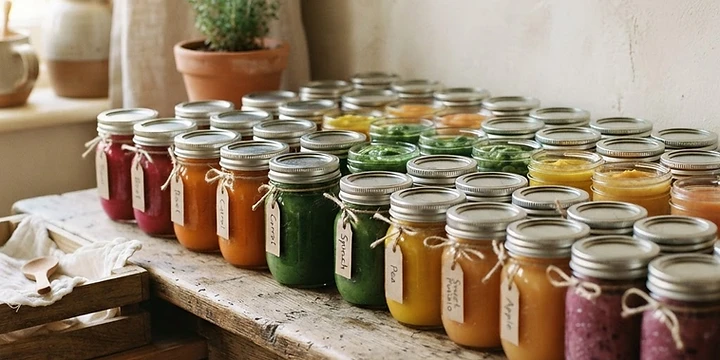
Proper storage keeps infant puree recipes safe and nutritious. Homemade baby puree recipes keep in the refrigerator for 1 to 2 days maximum — meat-based purees should be used within 24 hours. In the freezer, baby puree recipes keep for up to 3 months. Freeze portions in silicone ice cube trays (1 cube equals about 1 ounce), then transfer frozen cubes to labeled freezer bags with the recipe name and date. Thaw frozen purees overnight in the refrigerator or by placing the container in a bowl of warm water — never thaw at room temperature, and never refreeze a portion that has already been thawed. Once your baby's spoon touches a portion, discard whatever is not eaten within 2 hours to prevent bacterial growth. The AAP, WHO, and CDC are aligned on three safety rules for every baby puree recipe: no added salt (babies' kidneys cannot handle the sodium load), no added sugar (it is unnecessary and trains a preference for sweetness), and no honey before 12 months (honey can contain Clostridium botulinum spores that cause infant botulism). The CDC also recommends introducing common allergens — peanuts, eggs, dairy, wheat, soy, fish, and tree nuts — one at a time starting around 6 months, as early introduction may reduce allergy risk. Always cook meat, fish, and eggs thoroughly. Steam vegetables rather than boiling to retain water-soluble vitamins, and use the steaming water to thin purees — it contains nutrients that leached out during cooking. Texture progression matters as much as ingredients. Stage 1 purees should be thin and completely smooth. By Stage 2, you can leave a slightly thicker consistency. Stage 3 introduces soft lumps and protein. Stage 4 moves toward mashed and finger-food textures. Rushing texture progression can lead to gagging and food aversion, while staying on smooth purees too long can delay oral motor development. Let your baby's cues — not the calendar — guide the pace.
Frequently Asked Questions
How long do homemade baby puree recipes last in the fridge?
Fruit and vegetable baby puree recipes keep in the refrigerator for 1 to 2 days. Meat-based purees should be used within 24 hours. Label each container with the recipe name and date so you know when to discard.
Can I freeze baby puree recipes, and for how long?
Yes. Freeze baby puree recipes in silicone ice cube trays (1 cube equals about 1 ounce), then transfer to labeled freezer bags. They keep for up to 3 months. Thaw overnight in the fridge or in a bowl of warm water — never at room temperature.
How do I thaw frozen baby puree recipes safely?
Thaw frozen puree portions overnight in the refrigerator, or place the sealed container in a bowl of warm water. Never thaw at room temperature, and never refreeze a portion that has already been thawed. Once thawed, use within 24 hours.
When should I introduce common allergens in baby puree recipes?
The CDC recommends introducing common allergens — peanuts, eggs, dairy, wheat, soy, fish, and tree nuts — one at a time starting around 6 months. Early introduction may actually reduce the risk of food allergies. Introduce one allergen every 3 to 5 days and watch for reactions like rash, vomiting, or diarrhea.
Why should I not add salt to baby puree recipes?
The AAP and CDC advise against added salt because babies' kidneys are not mature enough to process the sodium load. Excess sodium in infancy can also set up a lifelong preference for salty foods. The natural sodium in whole ingredients is sufficient.
Why should I not add sugar to baby puree recipes?
Added sugar is unnecessary for babies and trains a preference for sweetness that can lead to picky eating and poor dietary habits later. The CDC recommends avoiding added sugar entirely before 12 months — fruits and vegetables provide natural sweetness.
Why is honey dangerous in baby puree recipes under 12 months?
Honey can contain Clostridium botulinum spores. In babies under 12 months, these spores can germinate and cause infant botulism, a serious and potentially fatal condition. The AAP, WHO, and CDC all advise no honey before 12 months. After 12 months, a baby's digestive system can handle the spores safely.
How do I progress the texture of baby puree recipes over time?
Start with thin, completely smooth Stage 1 purees at 4 to 6 months. By 6 to 8 months, move to slightly thicker Stage 2 combinations. At 8 to 10 months, introduce soft lumps and protein in Stage 3. By 10 to 12 months, transition to chunky mashes and soft finger foods. Let your baby's cues guide the pace — rushing can cause gagging and food aversion.
Do I need to cook meat, fish, and eggs for baby puree recipes?
Yes — always cook meat, fish, and eggs thoroughly. Chicken, beef, and fish should be fully cooked with no pink. Eggs should be hard-boiled or fully cooked. Never serve raw or undercooked animal products to a baby.
Conclusion
These 33 baby puree recipes take your baby from the very first taste at 4 months through textured meals at 12 months — all without added salt, sugar, or honey, in line with AAP, WHO, and CDC guidance. Batch-cook on weekends, freeze in one-ounce portions, and thaw overnight for fresh, real-food meals every day. For a complete cookbook with printable schedules and allergen tracking sheets, explore our Nutrient-Dense Puree Cookbook.
Ready to put this into practice?
Get our expert-crafted feeding guides and meal plans.


Elena Rodriguez, RD
RD
Registered Dietitian focused on first foods and baby-led weaning, with a practical, safety-first approach to introducing solids.
Explore our feeding guidesMedically reviewed by Dr. Sarah Chen, MD · See our editorial policy