9 Best First Foods for Baby (2026 Starter Guide)
In this article
Why First Foods for Baby Matter So Much
First foods for baby mark a monumental milestone — the transition from an all-milk diet to the world of solids. But first foods for baby are not just about nutrition; they are about establishing a healthy relationship with eating, developing oral motor skills, and discovering flavors and textures. The first foods for baby you choose set the tone for years of eating habits, so it is worth being intentional. Around 4 to 6 months, your baby's iron stores from birth begin to deplete, making iron-rich first foods for baby especially important. The signs of readiness include sitting with minimal support, good head control, interest in your food, and loss of the tongue-thrust reflex. When choosing first foods for baby, the golden rules are simple: single ingredient, easy to digest, and nutrient-dense. Introduce one new first food for baby every 3 to 5 days to monitor for allergic reactions. First foods for baby should be smooth and thin at first, gradually thickening as your baby learns to manage texture.
9 Safe and Nutritious First Foods for Baby
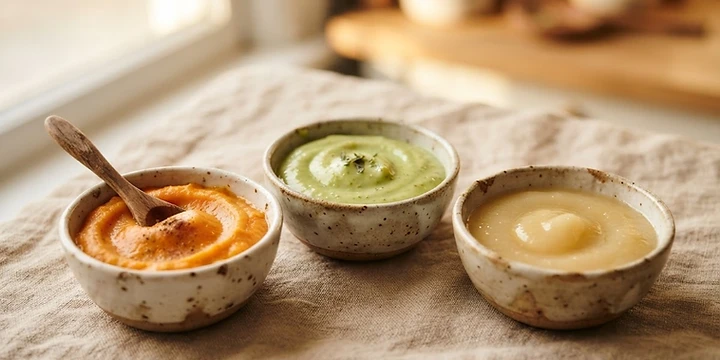
Here are nine excellent first foods for baby to begin with. 1. iron-fortified baby cereal (oatmeal or rice), a gentle first food for baby that is easy to digest and rich in iron. 2. mashed avocado — full of healthy fats and so easy to prepare, a perfect first food for baby. 3. sweet potato puree — packed with vitamin A and naturally sweet, a beloved first food for baby. 4. pear puree — gentle on the digestive system and unlikely to cause allergies. 5. banana mash — potassium-rich and naturally sweet. 6. butternut squash puree — another vitamin-A powerhouse among first foods for baby. 7. carrot puree — mild flavor, smooth texture. 8. apple puree (cooked and softened) — a classic first food for baby. 9. single-grain oatmeal — a versatile base for mixing with fruit purees. Each of these first foods for baby is low-allergen, easy to digest, and nutritionally meaningful. Start with one tablespoon of first food for baby once a day, gradually increasing to twice daily as your baby's appetite grows.
Ready to put this into practice?
Get our expert-crafted feeding guides and meal plans.
Signs Your Baby Is Ready for First Foods
Knowing when to start first foods for baby is just as important as knowing what to offer. The readiness signs for first foods for baby typically appear around 6 months (some babies are ready at 4 months, but waiting until 6 months is now recommended by most health organizations). Look for these indicators before introducing first foods for baby: your baby can sit upright with minimal support, holds their head steady, shows interest in your food (reaching, opening mouth), has lost the tongue-thrust reflex (which pushes food out of the mouth automatically), and can move food from the front of the mouth to the back to swallow. Do not rush first foods for baby before these signs appear — starting too early can increase allergy risk and may lead to choking. When you do begin first foods for baby, offer them after a milk feed so your baby is not overly hungry or frustrated. Make the experience positive — smile, talk, and let your baby explore. First foods for baby should be an adventure, not a battle. If your baby rejects first foods for baby, wait a week and try again — readiness can develop quickly.
Frequently Asked Questions
What are the best first foods for baby?
Iron-fortified cereal, mashed avocado, sweet potato puree, pear puree, and banana mash are excellent first foods. Start with single-ingredient, easy-to-digest options.
When can I start first foods for my baby?
Most babies are ready for first foods around 6 months, when they can sit with support, hold their head steady, and have lost the tongue-thrust reflex.
How do I introduce first foods safely?
Introduce one new single-ingredient food every 3 to 5 days, offer it after a milk feed, and watch for allergic reactions like rash, vomiting, or diarrhea.
Conclusion
Choosing the right first foods for baby sets the tone for years of healthy eating. Start with single-ingredient, iron-rich options, introduce one new food every 3 to 5 days, and let your baby explore at their own pace. For a complete starter guide with recipes and schedules, explore our First Foods Starter Guide.
Ready to put this into practice?
Get our expert-crafted feeding guides and meal plans.


Maya Thompson, RD
RD
Registered Dietitian specializing in pediatric nutrition, helping families build balanced, age-appropriate feeding schedules from the newborn stage through toddlerhood.
Explore our feeding guidesMedically reviewed by Dr. Sarah Chen, MD · See our editorial policy