When to Start Baby Food: 5 Signs of Readiness (2026)
In this article
The Right Time: When to Start Baby Food
The question of when to start baby food is one every parent asks, and the answer has evolved significantly over the years. The current recommendation from the World Health Organization, the American Academy of Pediatrics, and most health authorities is that when to start baby food is around 6 months of age. This is later than previous generations were told, and the reason is science: research shows that exclusive breastfeeding (or formula feeding) for 6 months provides optimal nutrition and immune protection, and starting solids too early can increase the risk of allergies, obesity, and digestive issues. When to start baby food is not a date on the calendar — it is a developmental milestone. Some babies are ready at 5 months, others at 7 months. The key is watching for signs of readiness, not watching the clock. When to start baby food also depends on your baby's individual growth, health, and feeding development. Consult your pediatrician at the 4-month or 6-month checkup to discuss when to start baby food for your specific baby.
5 Signs That Tell You When to Start Baby Food
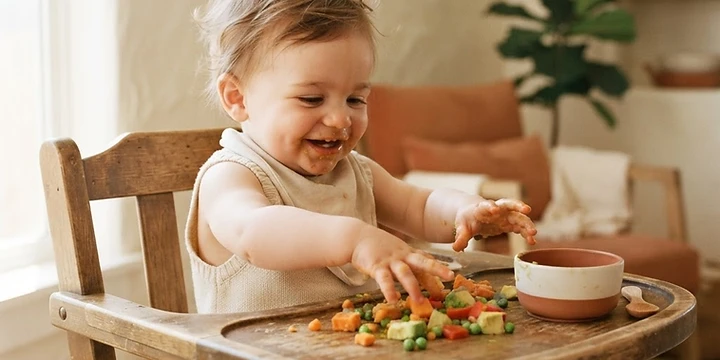
These five signs help you determine when to start baby food for your baby. 1. sitting with minimal support — your baby can hold their head steady and sit upright in a high chair, which is essential for safe swallowing. 2. loss of the tongue-thrust reflex — the automatic reflex that pushes food out of the mouth has faded, meaning food can move to the back of the mouth to be swallowed. 3. interest in food — your baby watches you eat, reaches for your food, and opens their mouth when food approaches. 4. doubled birth weight — most babies are ready for solids when they have doubled their birth weight (typically around 6 months). 5. oral motor readiness — your baby can move food from the front to the back of the mouth and is starting to make chewing motions even without teeth. When all five signs are present, you have your answer for when to start baby food. If only one or two signs are present, wait — when to start baby food should never be rushed.
Ready to put this into practice?
Get our expert-crafted feeding guides and meal plans.
Risks of Getting When to Start Baby Food Wrong
Starting too early or too late both carry risks. If you start baby food before 4 months, the risks include food allergies (the immature gut is more permeable to allergens), choking (your baby cannot sit upright or swallow properly), and displacement of breast milk or formula (which should be the primary nutrition source). Research clearly shows that starting solids before 4 months increases the risk of eczema, type 1 diabetes, and celiac disease. On the other hand, delaying when to start baby food beyond 7 months can lead to iron deficiency (stores are depleted by 6 months), delayed oral motor development, and food aversion (your baby may become resistant to new textures). The sweet spot for when to start baby food is between 5.5 and 6.5 months for most babies, guided by the readiness signs. When you do start baby food, remember that milk remains the primary nutrition source until 12 months — solids are complementary. The first few weeks of baby food are about exploration, not nutrition. When to start baby food is a milestone to celebrate, not stress over — trust the signs and your pediatrician.
Frequently Asked Questions
When should I start baby food?
The current recommendation is around 6 months, guided by readiness signs: sitting with support, head control, interest in food, and loss of the tongue-thrust reflex.
What happens if I start baby food too early?
Starting before 4 months increases the risk of food allergies, choking, and digestive issues. It can also displace essential breast milk or formula.
Can I start baby food at 4 months?
Some pediatricians may approve early introduction for allergy prevention, but the general recommendation is to wait until 6 months. Always consult your pediatrician first.
Conclusion
Knowing when to start baby food is about watching your baby, not the calendar. The five readiness signs — sitting, head control, interest, tongue-thrust reflex, and doubled birth weight — are your guide. For a full day-by-day routine once you start, see our 6 month old feeding schedule.
Ready to put this into practice?
Get our expert-crafted feeding guides and meal plans.


Dr. Sarah Chen, MD
MD, Pediatrician
Board-certified pediatrician with 12 years of experience in infant feeding, allergen introduction, and early nutrition. Reviews all allergy and safety content on NewbornMeals for medical accuracy.
Explore our feeding guides