Baby Led Weaning vs Purees: 6 Criteria Compared (2026 Guide)
In this article
- 1.Two Methods of Food Diversification: BLW vs Puree
- 2.Baby Led Weaning vs Purees: The Comparison Table
- 3.Safety and Choking: BLW vs Puree
- 4.Motor Development and Nutrition: BLW vs Puree
- 5.Convenience, Cost, and Preparation Time: BLW vs Puree
- 6.The Combined Method: Modified BLW with Purees
- 7.Frequently Asked Questions
- 8.Conclusion
Two Methods of Food Diversification: BLW vs Puree
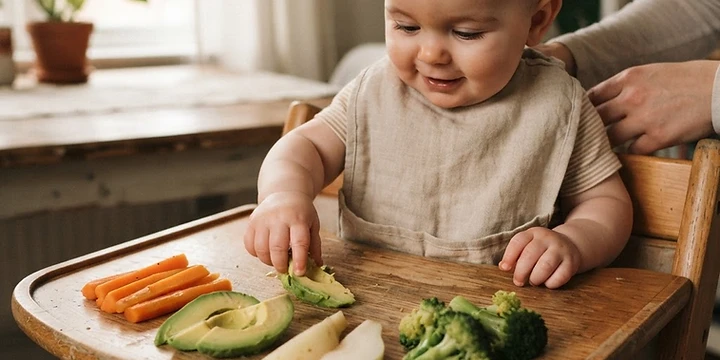
The baby led weaning vs purees debate is the first major feeding decision most parents face at 6 months. Baby led weaning (BLW) skips purees entirely and offers soft finger foods from the start, letting your baby self-feed. Traditional purees involve spoon-feeding smooth, blended foods that gradually thicken in texture over weeks and months. The blw vs puree question is not about which is objectively right — both approaches produce babies who eat solids by 12 months — but about which fits your family's comfort, time, and feeding philosophy. The American Academy of Pediatrics (AAP), the World Health Organization (WHO), and the Centers for Disease Control and Prevention (CDC) all recommend introducing solid foods at around 6 months of age, when your baby can sit upright with minimal support, hold their head steady, and has lost the tongue-thrust reflex. Both baby led weaning and purees begin at this same 6-month milestone, so the blw vs puree decision is about method, not timing. Before choosing, the AAP stresses three readiness signs that apply equally to both: sitting with minimal support, good head control, and interest in food. Milk — breastmilk or formula — remains the primary nutrition source until 12 months regardless of which method you choose. This guide compares baby led weaning vs purees across six criteria, with every recommendation sourced from the AAP, WHO, or CDC.

Baby Led Weaning vs Purees: The Comparison Table
Here is the baby led weaning vs purees comparison across six criteria. 1. Safety and Choking: Baby Led Weaning — similar choking risk when done correctly; more gagging in early weeks (a normal, protective reflex). Purees — lower gagging rate; similar choking risk when spoon-fed safely. 2. Motor Development: Baby Led Weaning — develops pincer grasp and hand-eye coordination earlier. Purees — self-feeding skills may be slightly delayed. 3. Nutrition: Baby Led Weaning — may produce more adventurous eaters; risk of iron gap without planning. Purees — easier to ensure adequate iron via fortified cereals and meat purees. 4. Convenience: Baby Led Weaning — one family meal; baby eats a modified version of what you eat. Purees — separate preparation or batch cooking required. 5. Cost: Baby Led Weaning — lower; shared family ingredients. Purees — higher; commercial jars or separate ingredients add up over months. 6. Preparation Time: Baby Led Weaning — minimal; cook once for the whole family. Purees — higher; blend, portion, and store separately. This blw vs puree table shows that neither method dominates across all six criteria — each has clear advantages. The sections below examine each criterion in detail with AAP, WHO, and CDC guidance.
Ready to put this into practice?
Get our expert-crafted feeding guides and meal plans.

Safety and Choking: BLW vs Puree
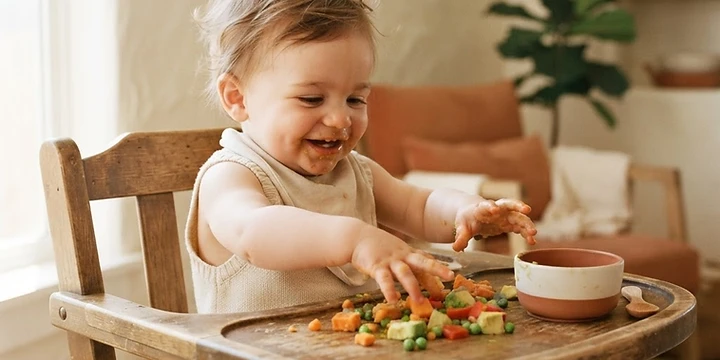
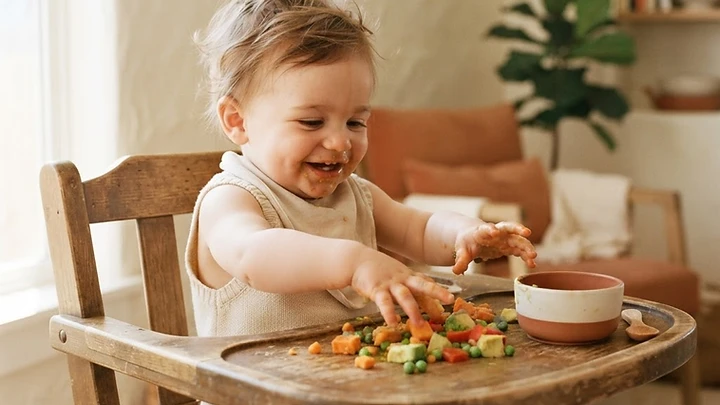
Safety is the top concern in the baby led weaning vs purees debate, and the evidence may surprise you. A landmark 2016 study published in JAMA Pediatrics found that choking rates are similar between BLW and purees when BLW is done correctly — the key phrase being done correctly. Purees do have a lower gagging rate because of their smooth texture, but the AAP and CDC both emphasize that gagging is a normal, protective reflex that helps babies learn to move food around their mouth. Gagging is common in the early weeks of BLW and decreases as oral motor skills improve. Choking, by contrast, is silent and dangerous — the airway is blocked and the baby cannot breathe or make sounds. To prevent choking with either method in the blw vs puree comparison, the CDC recommends: always supervise meals, keep your baby sitting upright in a high chair (never reclined), and for BLW, cut foods into safe shapes — finger-sized sticks for grasping, and always cut round foods like grapes, cherry tomatoes, and sausages lengthwise into quarters. The AAP advises that BLW foods should be soft enough to squish between your thumb and finger, and purees smooth enough to pass easily through a spoon. The CDC also lists foods to avoid before 12 months in both approaches: whole grapes, nuts, popcorn, hard raw vegetables, hot dogs, sticky foods like thick nut butter, and honey (botulism risk). Take an infant CPR course regardless of which path you choose in the baby led weaning vs purees decision — both are safe when parents are educated and attentive.
Motor Development and Nutrition: BLW vs Puree
Motor development and nutrition are where the baby led weaning vs purees comparison gets interesting. On motor development, BLW tends to develop the pincer grasp (thumb-and-finger pick-up) and hand-eye coordination earlier, because babies practice self-feeding from the first meal. Purees may delay self-feeding skills slightly, since the parent controls the spoon. However, the AAP notes that most babies catch up on motor skills by 12 months regardless of method — the long-term difference is small. On nutrition, the blw vs puree comparison has a clear trade-off. The AAP and CDC both stress that iron is the most critical nutrient from 6 months onward, because iron stores from birth deplete by 6 months. Purees make it easier to ensure adequate iron intake — iron-fortified cereals and meat purees are simple to offer and measure. BLW can have an iron gap if parents do not plan carefully, since babies may not consume enough iron-rich finger foods in the early weeks. To close this gap, the CDC recommends pairing iron-rich foods (meat strips, egg yolk, fortified toast) with vitamin C sources (fruit) to boost absorption. BLW may produce more adventurous eaters over time, because babies are exposed to diverse textures and flavors from the start, but this is a tendency, not a guarantee. The WHO and AAP both emphasize responsive feeding — letting your baby decide how much to eat — as the most important principle, regardless of method. In the baby led weaning vs purees nutrition comparison, purees have a slight edge on iron certainty, while BLW has a slight edge on texture variety.
Convenience, Cost, and Preparation Time: BLW vs Puree
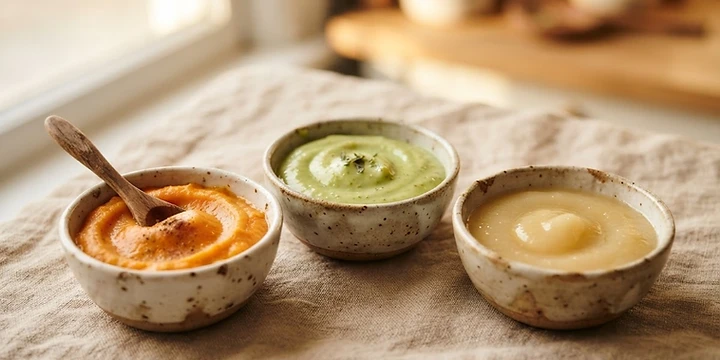
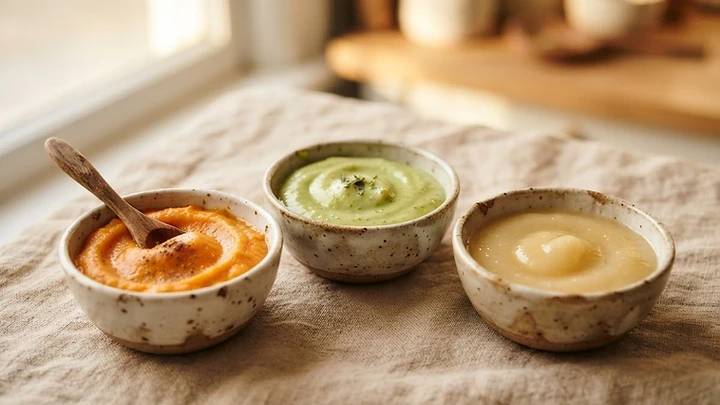
The practical side of the baby led weaning vs purees debate — convenience, cost, and preparation time — often tips the decision for busy families. On convenience, BLW wins clearly: you cook one family meal and your baby eats a modified version of what you eat (no salt, cut to safe shapes, soft enough to squish). Purees require separate preparation — either making batches at home with a blender and steamer, or buying commercial jars. On cost, the blw vs puree comparison favors BLW: shared family ingredients cost less than months of commercial jars, which typically run 1 to 2 dollars per jar and add up to hundreds of dollars over the 6-to-12-month period. Homemade purees are cheaper than jars but still require buying ingredients specifically for the baby. On preparation time, BLW is minimal — you are already cooking for the family, so adding a baby portion takes seconds. Purees demand more time: steaming, blending, portioning, and storing in ice cube trays or jars, then thawing and reheating for each meal. Batch cooking purees on weekends reduces the per-meal time but adds a weekly time block. The CDC notes that both methods are compatible with a balanced diet, so the baby led weaning vs purees convenience comparison comes down to your lifestyle: if you cook family meals daily, BLW saves time and money; if you rely on prepared foods or have limited cooking time, purees (especially commercial jars) may be more practical despite the higher cost.
The Combined Method: Modified BLW with Purees
If the baby led weaning vs purees debate feels like an all-or-nothing choice, it does not have to be. The combined method — sometimes called modified BLW or the hybrid approach — offers the best of both worlds and is increasingly recommended by feeding specialists. The AAP supports a combined approach that spoon-feeds iron-rich purees (like fortified cereal or meat puree) while also offering soft finger foods for self-feeding practice. This addresses the main nutritional concern in the blw vs puree comparison — iron intake — while still building self-feeding skills and exposing your baby to diverse textures. The combined method also reduces parental anxiety: there is no pressure to commit to one approach, and you can follow your baby's lead meal by meal. Some babies love finger foods but struggle with the spoon, and vice versa — the hybrid approach accommodates both. The CDC emphasizes that regardless of method, the core principles stay the same: responsive feeding (let your baby decide how much), no pressure, exposure to diverse flavors and textures, and milk as the primary nutrition source until 12 months. A practical combined schedule might offer iron-fortified cereal puree at breakfast, soft finger foods (avocado slices, steamed carrot sticks) at lunch, and either approach at dinner depending on your baby's mood and your time. The combined method also works well for daycare or caregiver situations where purees may be more practical during the day and finger foods at home in the evening. For a full comparison chart and decision framework, explore our BLW vs Purees Decision Guide.
Frequently Asked Questions
When should I start baby led weaning or purees?
The AAP, WHO, and CDC all recommend introducing solid foods at around 6 months of age. Both baby led weaning and purees begin at the same 6-month milestone, when your baby can sit with minimal support, hold their head steady, and has lost the tongue-thrust reflex.
Is baby led weaning more dangerous than purees?
No. A 2016 study in JAMA Pediatrics found choking rates are similar between BLW and purees when BLW is done correctly. Gagging is more common with BLW but is a normal, protective reflex, not choking. Always supervise meals and take an infant CPR course.
How do I prevent choking in the blw vs puree comparison?
The CDC recommends always supervising meals, keeping your baby upright in a high chair, cutting round foods like grapes lengthwise into quarters, and ensuring BLW foods are soft enough to squish between your fingers. Avoid whole nuts, popcorn, hard raw vegetables, hot dogs, and honey before 12 months.
Can I combine baby led weaning and purees?
Yes. The AAP supports a combined approach that spoon-feeds iron-rich purees while also offering soft finger foods. This addresses the iron-intake concern with pure BLW while still building self-feeding skills.
Which has better nutrition: baby led weaning or purees?
The AAP and CDC note that iron is the most critical nutrient from 6 months onward. Purees make it easier to ensure adequate iron via fortified cereals, while BLW may produce more adventurous eaters. Pair iron-rich foods with vitamin C sources to boost absorption in either method.
What are the signs of readiness for either method?
The AAP lists three key signs: sitting upright with minimal support, holding the head steady, and showing interest in food. These apply equally to baby led weaning and purees. Most babies show all three around 6 months.
Is baby led weaning cheaper than purees?
Generally yes. BLW uses shared family ingredients, while commercial puree jars cost 1 to 2 dollars each and add up to hundreds of dollars over months. Homemade purees are cheaper than jars but still require separate ingredients and preparation time.
Does baby led weaning save time compared to purees?
Yes. BLW requires minimal extra preparation since your baby eats a modified version of the family meal. Purees require steaming, blending, portioning, and storing separately, or buying and opening commercial jars for each meal.
Conclusion
The baby led weaning vs purees debate does not have to be all-or-nothing. Across six criteria — safety, motor development, nutrition, convenience, cost, and preparation time — each method has clear strengths, and the AAP, WHO, and CDC all support starting either approach at around 6 months. Whether you choose BLW, purees, or the combined hybrid method, the core principles are the same: responsive feeding, no pressure, diverse flavors, and milk as the primary nutrition source until 12 months. For a full comparison chart, decision framework, and 4-week hybrid feeding plan, explore our BLW vs Purees Decision Guide.
Ready to put this into practice?
Get our expert-crafted feeding guides and meal plans.


Dr. Sarah Chen, MD
MD, Pediatrician
Board-certified pediatrician with 12 years of experience in infant feeding, allergen introduction, and early nutrition. Reviews all allergy and safety content on NewbornMeals for medical accuracy.
Explore our feeding guides
