Baby-Led Weaning First Foods
The complete guide to baby-led weaning first foods — 20 safe starter foods, portion sizes, preparation methods, and a 7-day starter schedule.
What Are the Best First Foods for BLW?
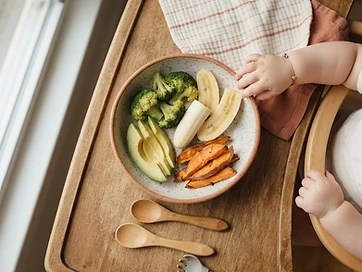
These foods are the foundation of your baby's self-feeding journey, and choosing the right ones makes a real difference. The best options are soft enough to squish between your baby's gums but firm enough to grip in a fist. At 6 months, most babies have developed the palmar grasp (whole-hand grip), so foods should be cut into stick shapes about the size and length of an adult index finger — that lets your baby hold one end while gnawing on the other. Twenty solid starter options: avocado spears, banana spears (with part of the peel left on for grip), roasted sweet potato wedges, steamed broccoli florets (stem as a handle), scrambled egg strips, steamed apple slices, ripe pear spears, steamed carrot sticks, butternut squash spears, baked oatmeal fingers, steamed zucchini spears, ripe mango slices, steamed green beans, shredded slow-cooked chicken, soft meatballs, whole grain toast strips with a thin nut butter spread, ricotta on toast strips, steamed cauliflower florets, soft-cooked pasta spirals, and mashed potato fingers. Together these cover iron, healthy fats, vitamins, and fiber. The key test: if you can squish the food between your thumb and forefinger with gentle pressure, it's soft enough. Avoid hard, round, or sticky foods like whole grapes, raw apple chunks, nuts, popcorn, or globs of nut butter.
How to Prepare Them Safely
Preparation is the most critical part of getting BLW right, and it addresses the two biggest concerns: choking and frustration. The golden rule is the squish test — if you can't easily squish a food between your thumb and finger, it's too hard. Sweet potatoes, carrots, apples, and pears should be steamed or roasted until very soft, then cut into finger-sized sticks (about 2 inches long, half an inch thick) so your baby can grip with a whole hand while enough protrudes to bite. Round foods like grapes or cherry tomatoes should always be quartered lengthwise to eliminate the choking shape, and spreads like nut butter should go on thinly — never as a glob. Start with one or two foods per meal so your baby can explore each texture and flavor without being overwhelmed, and place them directly on the highchair tray or a suction plate rather than in a bowl that can be thrown. Serve at a comfortable temperature and test it yourself first. Many of these foods can simply be pulled from your own meal before you add salt — if you're having roasted sweet potato, cut a few spears for your baby before seasoning the rest. Salt, sugar, and honey should all be avoided: honey for botulism risk, salt because baby kidneys can't process it well, and sugar because it sets up an early preference for sweets.
When to Start
Timing matters as much as food choice. The AAP and WHO both recommend starting solids around 6 months, but age alone isn't the deciding factor — your baby needs to show readiness first. Look for sitting up with minimal support, holding the head steady, showing interest in food (reaching for your plate, watching you eat), losing the tongue-thrust reflex, and being able to bring objects to the mouth intentionally. Most babies show all these signs around 6 months, though some are ready slightly earlier or later. Starting before your baby is developmentally ready increases frustration and choking risk; delaying past 6 months may miss the window for allergen introduction and flavor acceptance. When you do start, pick a time your baby is alert and mildly hungry but not ravenous — often right after a milk feed. Offer solids once a day at first, then twice, building to three meals plus snacks by 9-12 months. Remember these foods complement, not replace, breastmilk or formula until at least 12 months.
Common Mistakes to Avoid
A few avoidable mistakes trip up a lot of parents starting out. Cutting food too small — small dice-sized pieces are actually harder for a 6-month-old to grip than stick shapes. Making food too hard — raw carrot, raw apple, and hard cheese are choking hazards; always cook until food passes the squish test. Offering too many foods at once — stick to one or two per meal so your baby can explore without overwhelm. Panicking about gagging — it's a normal, protective reflex that moves food from the back of the mouth to the front, and while it looks alarming, it isn't choking. Learn the difference before you start: gagging looks like a red face, coughing, and food coming forward, while choking is silent, with blue lips and no breath. Also avoid adding salt, sugar, or honey, and don't expect much to actually get eaten at first — early sessions are about exploration, not nutrition, since milk is still doing the nutritional heavy lifting. For a complete guide with 20 starter foods, recipes, and a 7-day schedule, see our Baby Led Weaning First Foods Guide below.
Medically reviewed by Dr. Sarah Chen, MD · See our editorial policy
Featured Guides

 Dietitian-approvedBaby-Led Weaning First Foods
Baby Led Weaning First Foods Guide
20 safe baby led weaning first foods, preparation photos, a 7-day starter schedule, and a gagging vs choking guide — everything you need to start BLW with confidence.
eBook (PDF)
Frequently Asked Questions
What are the best first foods for baby led weaning?
Avocado spears, banana spears, sweet potato wedges, steamed broccoli florets, scrambled egg strips, and soft-cooked carrot sticks are great starters. Cut them into finger-sized sticks and make sure they pass the squish test.
When can I start baby led weaning first foods?
Most babies are ready at 6 months, when they can sit with support, hold their head steady, show interest in food, and have lost the tongue-thrust reflex.
How do I cut baby led weaning first foods?
Cut them into stick shapes about 2 inches long and half an inch thick — the size and shape of an adult index finger. Always quarter round foods like grapes lengthwise.