What Do the Japanese Feed Their Babies? (2026 Guide)
In this article
What Do the Japanese Feed Their Babies First?
What do the Japanese feed their babies is a question with a distinct answer compared to Western weaning: rinyushoku, the traditional Japanese weaning method, starts with okayu — a thin rice porridge — rather than sweet fruit or vegetable purees. Okayu is gentle on a new digestive system and unseasoned, letting babies get used to texture before flavor. Dashi, a savory broth made from kombu seaweed and bonito flakes, is often introduced early too, giving babies a taste of umami rather than sweetness as their baseline flavor. This is one reason Japanese weaning is associated with less picky eating later — babies are exposed to savory, mineral-rich flavors from the very first spoon instead of an all-sweet start.
How Japanese Feeding Compares to Western Baby Food
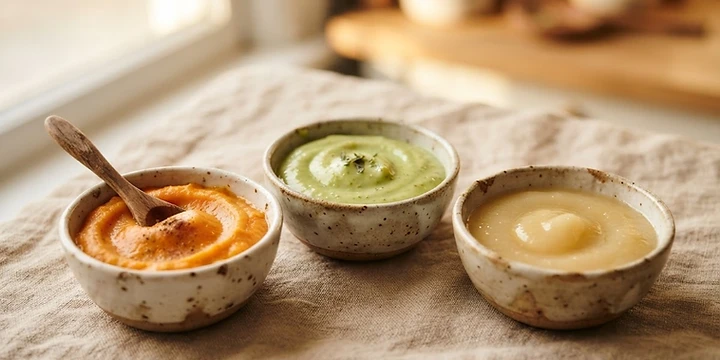
Western first foods (sweet potato, banana, avocado) lean sweet by default. What do the Japanese feed their babies leans savory and mineral-forward — mashed tofu, well-cooked white fish, and finely grated vegetables in dashi broth follow the initial okayu stage. Portions are also smaller and more frequent, reflecting a broader cultural emphasis on varied, balanced small meals rather than large single feedings. For parents in Western countries, you don't need to overhaul your approach — but folding in a savory dashi-based puree alongside your usual sweet potato and avocado gives your baby a broader flavor foundation early on. For more homemade baby food approaches worth trying, see our full guide to the best homemade baby food.
Ready to put this into practice?
Get our expert-crafted feeding guides and meal plans.
Frequently Asked Questions
What is the first food given to Japanese babies?
Okayu, a thin rice porridge, is the traditional first food in Japanese weaning (rinyushoku), followed by dashi broth and mashed vegetables.
Why is Japanese baby food less sweet?
Japanese weaning intentionally introduces savory, umami flavors from dashi broth early, rather than starting with sweet fruit purees as many Western approaches do.
Conclusion
Japanese weaning offers a savory, broth-forward alternative to the sweet-first approach common in the West. For a full breakdown of what makes homemade baby food genuinely nutritious, see our complete guide.
Ready to put this into practice?
Get our expert-crafted feeding guides and meal plans.


Elena Rodriguez, RD
RD
Registered Dietitian focused on first foods and baby-led weaning, with a practical, safety-first approach to introducing solids.
Explore our feeding guidesMedically reviewed by Dr. Sarah Chen, MD · See our editorial policy