Homemade Baby Food Without a Blender: 10 Easy Methods (2026)
In this article
Making Homemade Baby Food Without a Blender
You don't need a blender to make nutritious homemade baby food — homemade baby food without blender methods are simple, effective, and have been used for generations. The key to homemade baby food without blender is choosing foods that are naturally soft when cooked and can be mashed with basic tools. Homemade baby food without blender is often preferable because it creates natural texture variation that helps develop oral motor skills — perfectly smooth purees can actually delay chewing development. The tools needed for homemade baby food without blender include: a fork, a potato masher, a fine mesh strainer, a grater, and a steamer basket. Homemade baby food without blender is also more economical — no expensive equipment to buy or clean. The homemade baby food without blender approach works best with foods that soften easily when cooked: sweet potatoes, bananas, avocados, pears, apples, squash, carrots, peas, and well-cooked meats. As your baby grows (7 to 8 months), homemade baby food without blender becomes even easier — you can simply mash foods with a fork to a chunky texture, which is actually better for development than ultra-smooth purees.
10 Methods for Homemade Baby Food Without Blender
Here are ten methods for homemade baby food without blender. 1. fork mashing — for soft foods like banana, avocado, and well-cooked sweet potato. 2. potato masher — for larger batches of cooked vegetables like carrots, squash, and peas. 3. fine mesh strainer — push cooked food through for a smoother texture (works well for peas, carrots, and apples). 4. grating — raw or cooked foods can be grated for a fine texture (apple, carrot, cheese). 5. ricing — a potato ricer creates a fine, even texture for cooked vegetables. 6. steaming and smashing — steam vegetables until very soft, then smash with a fork. 7. food mill — a hand-cranked food mill creates smooth purees without electricity. 8. mortar and pestle — for small batches of soft foods. 9. chopping very fine — for 8+ month babies, simply chop cooked foods very small with a knife. 10. pre-loaded spoon — for soft foods like yogurt, cottage cheese, or thick oatmeal, simply load a spoon and hand it to your baby. These homemade baby food without blender methods cover all textures from smooth purees to chunky finger foods.
Ready to put this into practice?
Get our expert-crafted feeding guides and meal plans.
Best Foods for Homemade Baby Food Without Blender
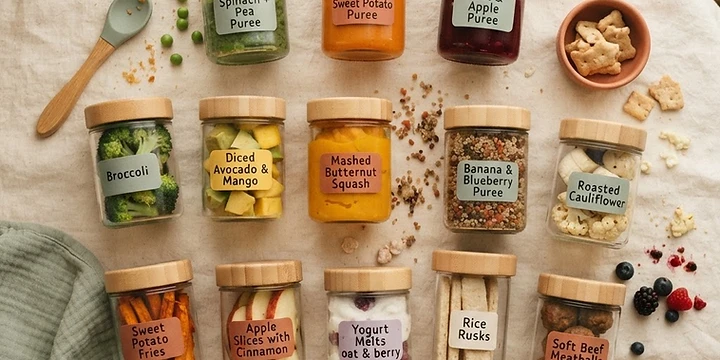
The best foods for homemade baby food without blender are those that soften easily when cooked or are naturally soft. Fruits for homemade baby food without blender: banana (just mash with a fork), avocado (mash with a fork), ripe pear (grate or mash), cooked apple (steam and mash or rice), ripe peach (mash), and ripe mango (mash). Vegetables for homemade baby food without blender: sweet potato (bake or steam, then mash), carrot (steam until very soft, then mash or rice), butternut squash (roast or steam, then mash), peas (steam and push through a strainer), broccoli (steam florets until very soft, then chop fine), and zucchini (steam and mash). Proteins for homemade baby food without blender: well-cooked lentils (mash with a fork), hard-boiled egg yolk (mash with a fork), finely shredded chicken or fish, and soft tofu (mash). Grains for homemade baby food without blender: oatmeal (cook until very soft), rice (cook until very soft and mash), and whole wheat bread (soak in milk and mash). The homemade baby food without blender approach encourages natural texture progression — start with smooth mashes at 6 months, move to chunky mashes at 7 to 8 months, and finely chopped pieces at 9 to 12 months. For a complete recipe collection with texture guides, explore our Nutrient-Dense Puree Cookbook.
Frequently Asked Questions
Can I make baby food without a blender?
Yes. Homemade baby food without blender is simple — use a fork, potato masher, fine mesh strainer, or grater. Soft foods like banana, avocado, and well-cooked vegetables are ideal for fork mashing.
What foods are best for homemade baby food without blender?
The best foods are banana, avocado, sweet potato (cooked), carrot (steamed soft), butternut squash, apple (cooked), and well-cooked lentils. All can be mashed with basic kitchen tools.
Is homemade baby food without blender as smooth?
Homemade baby food without blender is often slightly chunkier, which is actually beneficial — texture variation helps develop oral motor and chewing skills. Use a fine mesh strainer for smoother textures when needed.
Conclusion
Homemade baby food without blender is simple, economical, and often better for your baby's development due to natural texture variation. With just a fork, masher, and steamer, you can create nutritious meals at every stage. For a complete recipe collection with texture guides, explore our Nutrient-Dense Puree Cookbook.
Ready to put this into practice?
Get our expert-crafted feeding guides and meal plans.


Elena Rodriguez, RD
RD
Registered Dietitian focused on first foods and baby-led weaning, with a practical, safety-first approach to introducing solids.
Explore our feeding guidesMedically reviewed by Dr. Sarah Chen, MD · See our editorial policy